

My car is an empty boat. Wait, what?
How mindfulness helps us stop taking other people (and ourselves) so personally.

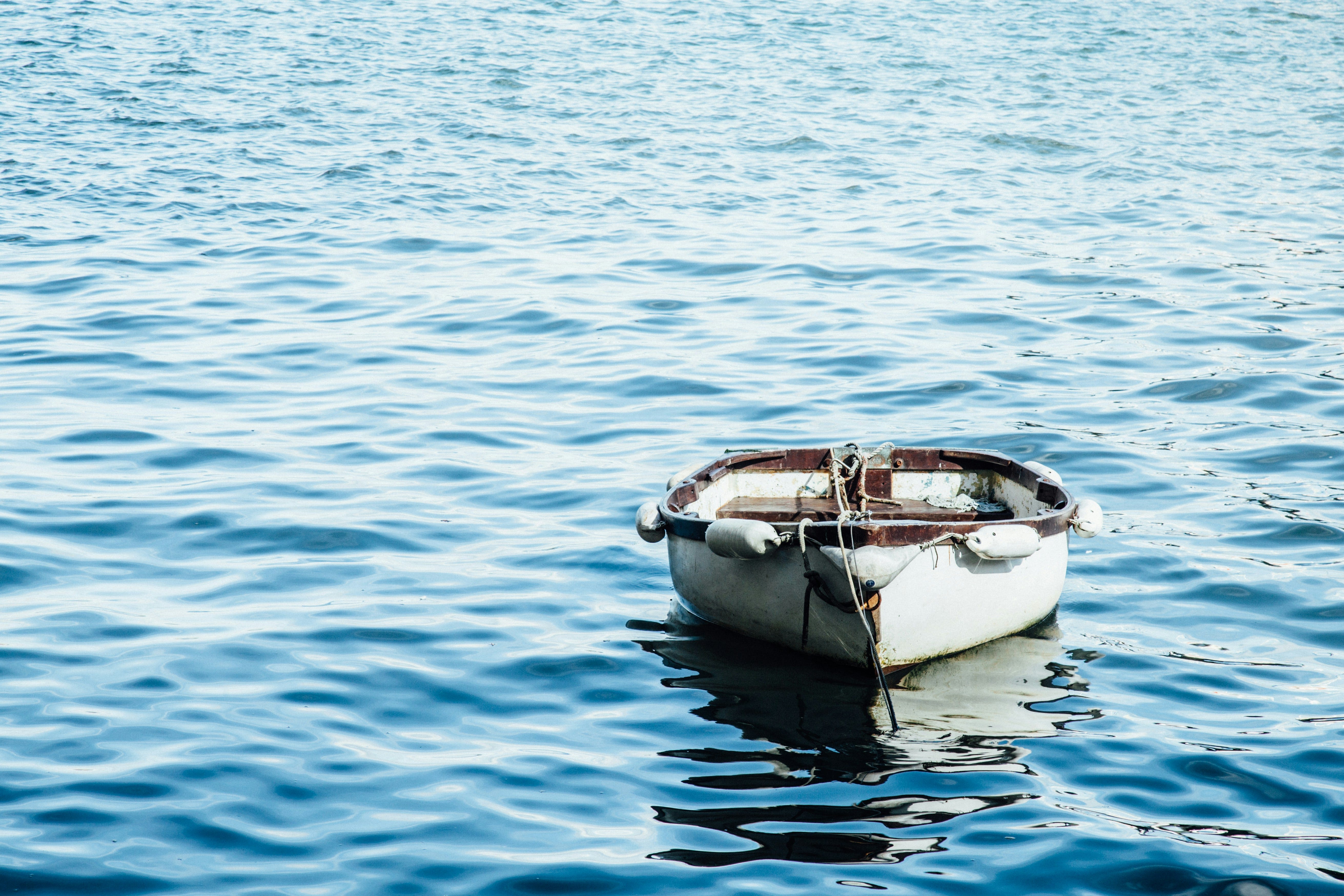
Photo by Oliver Cole on Unsplash
There’s a story in the Taoist tradition that goes something like this:
A man takes his boat out on a lake one morning. It’s foggy. As it begins to clear, he makes out the shape of another boat not too far off. How lovely to share the lake on such a morning, he thinks. Moments later, he realises the boat is heading in his direction. He waves his arms, yells a warning, but the other boat has sped up, and to his horror it crashes right into him. The man jumps up, furious, shaking his fists and shouting at whomever it was that had been so reckless. He notices the boat is empty. His anger vanishes.
I never liked this story. It kicked around in meditation classes and in my mind for some years and always bothered me. I didn’t like the way it felt in my belly. Am I supposed to take solace in the fact that the boat was empty? Why did the boat have to crash? Where was the person? Is the empty boat meant to be me? I don't want to be the empty boat etc etc.
And then in 2017 our youngest moved to a school across town. We found ourselves sitting in the car in dense thickets of traffic for quite some hours each week, and it got me thinking.
Well what really got me thinking was my swearing. I quickly noticed how activated my system got as I ducked and weaved around the back streets, priding myself on shaving two minutes off the trip here and there, and pointing out to fellow drivers that they were (certain types of) fools for trying to push in or cut me off - all the while not really setting the most excellent example to our daughter.
One particular morning we found ourselves sitting for a length of time alongside a train line on a narrow road choked with SUVs. As I geared up to run the gauntlet to the distant level crossing, I found myself gripping the wheel too tightly and glaring at the oncoming cars in a Game-of-Thrones-level state of fight or flight: heart rattling, breath held, palms sweating.
For some reason, at that moment I was struck by the question I had heard Tara Brach ask countless times in her weekly online meditation talks: What am I believing to be true right now? And I could see with gobsmacking, absolute clarity that I was projecting a feverish narrative onto these cars and their drivers. I was casting them all as the enemy, convincing myself that they were intentionally trying to thwart my progress in some way. I was lost in a binary of ‘them’ and ‘me’, where ‘they’ were happening to ‘me’. I stopped, waited, inhaled deeply, consciously slowed down my revved system as I exhaled, and then, out of the blue, felt the words take shape in my mind: It’s just an empty boat.
The empty boat story had finally landed.
Neuroscience tells us that whatever we practise, grows stronger. The more I respond with patience in a particular situation, the more likely it becomes that I will respond with patience next time. Conversely, the more I drive around like a tight ball of stress, the more likely I am to drive around like a tight ball of stress.
I was practising activating my sympathetic nervous system, without realising it. My brain and body were detecting threat everywhere, and my amygdala and heart rate were following suit. This defended self was being primed for more and more stress, whilst being completely at the mercy of external conditions.
It’s just an empty boat flipped the switch instantly.
They were all empty boats! There was no story coming at me from another person on the road in their car. Their movements and choices and impulses were stemming from all of the causes and conditions and amassed beliefs and experiences in their lives that had built up over time and led them to that particular instant. Any manifest behaviour was simply a reflection of what was going on for that person, resulting from an endless stream of all their prior moments.
And on that particular morning? For all I knew there could have been a sick child at home, or an ailing parent. They may have just had a steaming row, or received news of a diagnosis. They may have also just been in desperate need of coffee. Who knows? What I can tell you for certain is that it had nothing to do with me. I was just making that up, projecting story after story onto empty boats.
While I was at it I included myself in the boat story, repeating over and over: My car is an empty boat, my car is an empty boat. My heart, body and mind felt lighter and more spacious. Aligning with the empty boat was not negating, or nihilistic, as I had thought it might be: it was strangely liberating. It let me put down my ancient clipboard of grievances and negative self-critique, my defences and my guard, and allowed me respite from feeling so identified with all my limbic mess. Removing the storyline and the drama allowed a smoother, wider river to flow through me, clear of flotsam and log jams.
Once I had pictured myself, and others, as empty boats, my experience fundamentally altered. Instead of focussing all of my outward attention on the objects I was encountering ie cars and their drivers, I did the reverse. I withdrew my focus from the cars on the road and placed it instead on the ever changing space in between them. Breathing into this negative space between the cars seemed to further neutralise the subjective narrative my mind so instinctively chased. And interestingly, as a bonus, rather than reducing my reflexes or concentration on the road, this practice improved and expanded the quality of my attention as it was no longer stemming from a place of reactive, limbic charge.
They say how you do anything is how you do everything. Our habitual means of daily interaction with the world have the capacity to hold a mirror up to us, and reveal the workings of our minds. I guess that’s why so many of the ancient teachings revolve around commonplace activities (ploughing fields, sowing seeds, ripening fruit, yoking oxen, sitting in boats). Perhaps it is apt, then, that it took me till 2017 to listen to the wisdom of the empty boat story - when I was spending regular swathes of time in a car in peak hour traffic with my daughter, and being afforded the repeated and humbling lesson of seeing my stress levels manifest around me in the form of suffering.
As a disclaimer, I will state for the record that I haven’t ‘fixed’ myself. My nervous system remains pretty fried following three years of cancer treatment, even six years after my final surgery. I still feel the hot flood of fear as it charges through me unannounced. I still overreact. I still get stressed, shitty and impatient, sometimes all at the same time. I still hold many opinions and judgements about other people, other drivers, and sometimes I may find myself sharing them out loud. What’s different now, is that when I remember, I can choose to let go of the storyline, and return to the spaciousness of the empty boat.
There will be a million times that I forget - which is okay because the Pali word, sati, that is often translated as ‘mindfulness’, is closer in meaning to the English word ‘remembering’. Implied in it, therefore, so utterly generously, is that we forget. We are wired to forget because we have nervous systems that are organised around survival and that need to be able to activate in less than a split second. When there have been extended periods of trauma, our systems are even more hypervigilant and reactive.
So when I do remember, I can pause. I can notice where I’m at, breathe, and exhale as I whisper slowly to myself, ‘My car is an empty boat’. I can rest in the soothing space that opens up, and know that I am practising a loving, nurturing way of being with myself, and with others. I can offer myself compassion again and again for the suffering that stems from a reactive mind, and let my body register feelings of safety, neutrality, and the tenderest beginnings of equanimity.
As you do, I forgot to read this until now, and as always, thank you Kate for sharing your insight (you really have a gift for illuminating these ideas with enormous relatability) and fabulous turns of phrase ("my ancient clipboard of grievances and negative self-critique", "the strutting talisman of all our collective anxiety"). I'm going to be pondering all angles of the empty boat story for a while!